The 3 Biggest Mistakes Homeowners Make With Outdoor Lighting (And How to Avoid Them)
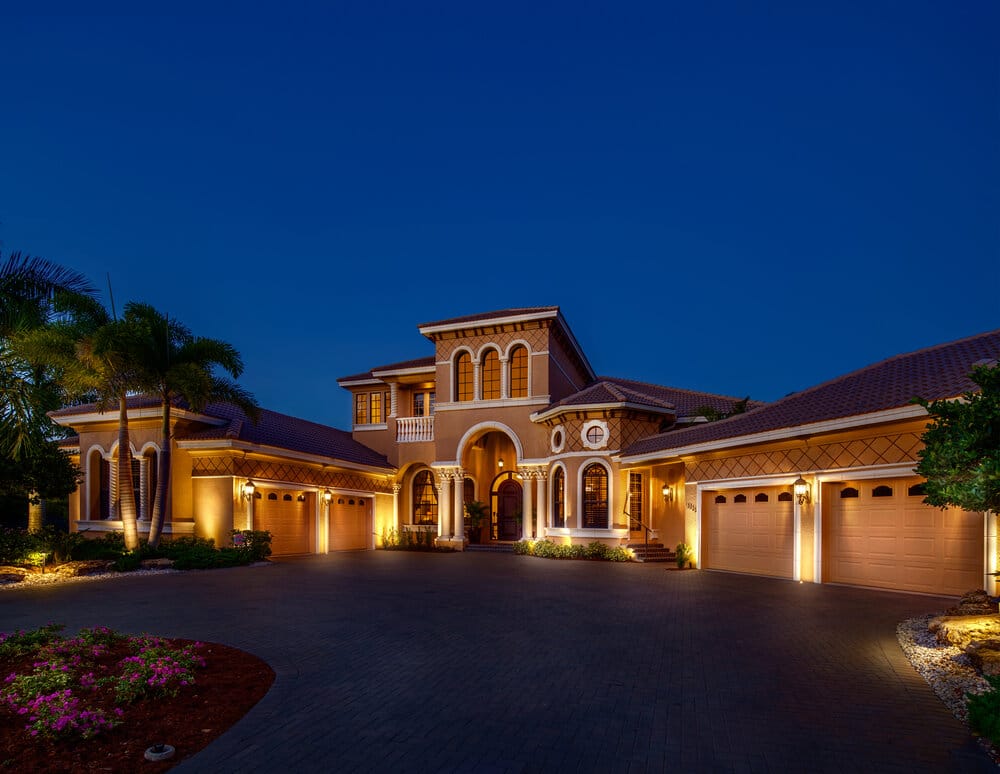
Mistake #1: The Blinding Glare
There is nothing more unwelcoming than pulling into a driveway and being blinded by a misaimed spotlight. Glare occurs when the light source (the bulb itself) is directly visible to the eye, rather than just the effect of the light on the subject. This not only looks cheap but creates a harsh, uncomfortable environment that actually decreases safety by creating deep shadows and blinding guests.
The Solution: Professional design intent relies on shielding and precise aiming. We use fixtures with deep cowls and glare guards, positioning them so you see the beautiful illumination on your home's facade or tree canopy—never the bulb itself. It's about seeing the effect, not the source.
Mistake #2: The "Airport Runway" Effect
When homeowners first attempt pathway lighting, the instinct is often to line the walkway with fixtures spaced perfectly evenly on both sides, creating what designers call the "airport runway." This rigidly symmetrical approach looks artificial, cluttered, and draws the eye to the fixtures rather than the landscape.
The Solution: We use a staggered, natural approach. By placing lights to illuminate the edges of the path and the surrounding landscape beds, we guide the eye gracefully. The goal is to create overlapping pools of soft light that provide safe passage while highlighting the beauty of the surrounding flora. For more on achieving the right aesthetic, discover why warm white light is essential.
Mistake #3: Overlighting (The Stadium Effect)
More light does not equal better lighting. A common misconception is that a property needs to be flooded with high-wattage bulbs to be secure and beautiful. In reality, overlighting washes out architectural details, destroys the nighttime ambiance, and causes light pollution that frustrates neighbors.
The Solution: Luxury landscape lighting is about contrast. The interplay between light and shadow is what creates drama, depth, and elegance. We strategically leave certain areas dark to make the illuminated focal points pop. By using lower lumen outputs and focusing on key architectural features and mature trees, we create a refined, estate-quality look that feels secure yet intimately inviting.